|
Getting your Trinity Audio player ready...
|
With the economy in the state it’s in, many South Africans are drowning in debt. Managing multiple debts is a nightmare and can lead to financial stress and instability. Debt review is an option that’s gaining popularity.
This article will explain what debt review is, when to do it, the pros and cons and some stats to give you a full understanding of this financial tool.

What is Debt Review?
Debt review (also known as debt counselling) is a legal process to help over-indebted individuals get back in control of their finances. Introduced by the National Credit Act in 2007, debt review helps consumers who are struggling to pay their debts by negotiating with creditors for more affordable payment plans. A registered debt counsellor will assess your financial situation, create a new payment plan and negotiate with creditors to accept the new terms.
When Should You Really Do Debt Review?
Debt review is not for everyone. It’s for those who are over-indebted, meaning their monthly debt payments are more than their income or they can’t pay their financial obligations consistently. Do debt review if:
- You’re consistently missing payments: If you’re regularly missing payment dates or skipping payments altogether, it’s a sign your debt is unmanageable.
- Creditors are threatening legal action: When creditors start threatening or taking legal action, debt review can provide legal protection.
- You’re using credit to pay off credit: If you’re taking out new loans to pay off existing debt, you’re in a debt spiral that needs to be stopped.
- Your financial situation is causing you stress: If your debt is affecting your mental and physical health, it’s time to get help.

Debt Review Benefits
Debt review has many benefits, so it’s an option if you’re struggling with debt:
- Protection from creditors: Once under debt review, creditors can’t take legal action against you, giving you some space.
- Lower monthly payments: Debt counsellors will negotiate lower payment amounts, making them more affordable and manageable.
- One monthly payment: Consolidating multiple debts into one payment simplifies the payment process.
- Financial rehabilitation: Debt review includes financial education and budgeting advice to help you get back in financial shape.
Debt Review Side Effects/Drawbacks
While debt review has its benefits, it also has some drawbacks to consider:
- Credit record: Debt review will be noted on your credit record, which will affect your ability to get new credit during and shortly after the process.
- Limited access to credit: While under debt review, you can’t take on new debt, which might be tough if unexpected expenses come up.
- Longer repayment period: Lower monthly payments may extend the repayment period and result in more interest paid over time.
- Fees involved: Debt counsellors charge fees for their services which will add to your debt burden initially.

Debt Review Stats
Here are some stats about debt review in South Africa:
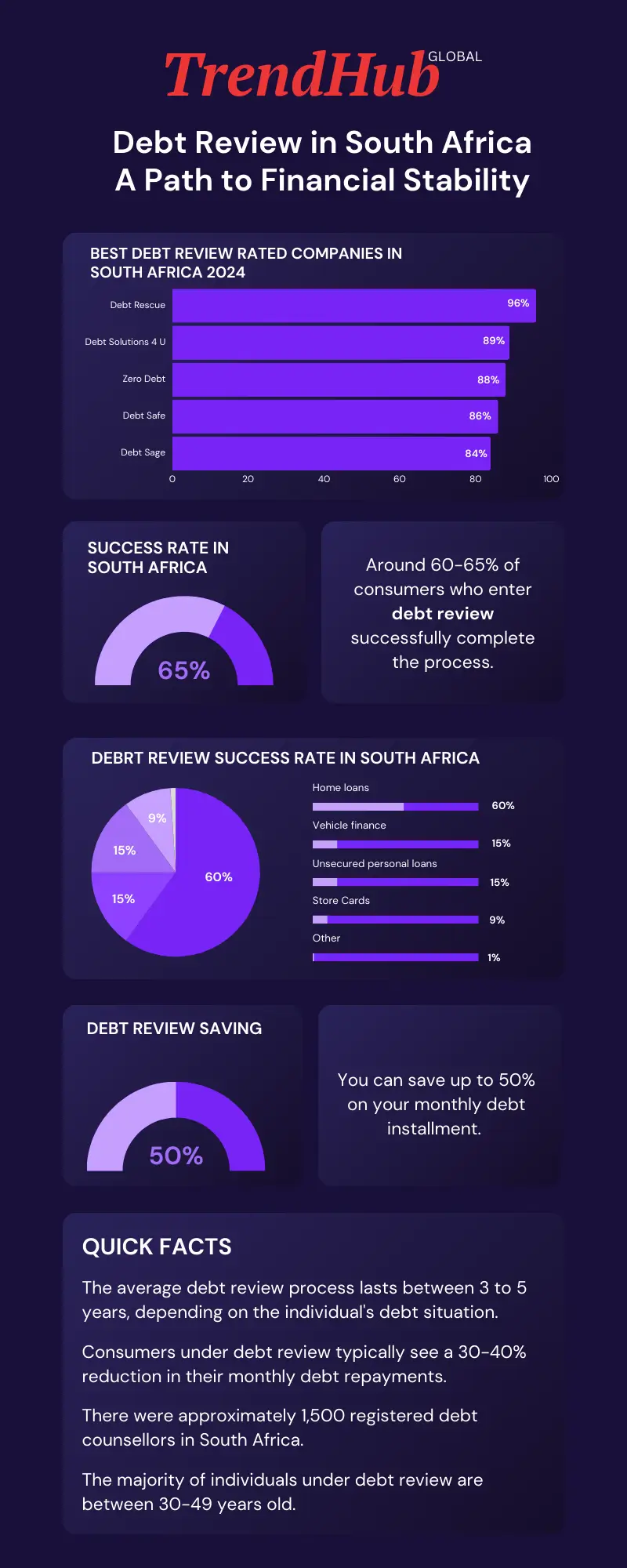
- Over 2 million South Africans are under debt review.
- 60% of those who do debt review complete the process and get back to financial stability.
- The average debt review period is extended by 3 to 5 years.
- 70% of consumers under debt review feel significant relief from financial stress.
Debt review is a lifeline for those drowning in debt, a structured way to get back in control of your finances and protection from creditors. But weigh the benefits against the drawbacks and make an informed decision based on your own financial situation.
For many South Africans, debt review has been the way out of financial trouble but it requires commitment and making big changes to your financial habits. If you’re overwhelmed by debt, talking to a registered debt counsellor is the first step to financial freedom.


