|
Getting your Trinity Audio player ready...
|
Cyril Ramaphosa was Re-elected as president of South Africa. Cyril Ramaphosa’s re-election as president of South Africa marks a significant chapter in the country’s political landscape, characterized by renewed aspirations and formidable challenges. As the leader of the African National Congress (ANC), Ramaphosa’s victory symbolizes continuity and change, promising a blend of experience and fresh perspectives. His re-election is particularly noteworthy in the context of the ANC’s historical dominance and recent struggles with internal divisions and public discontent.
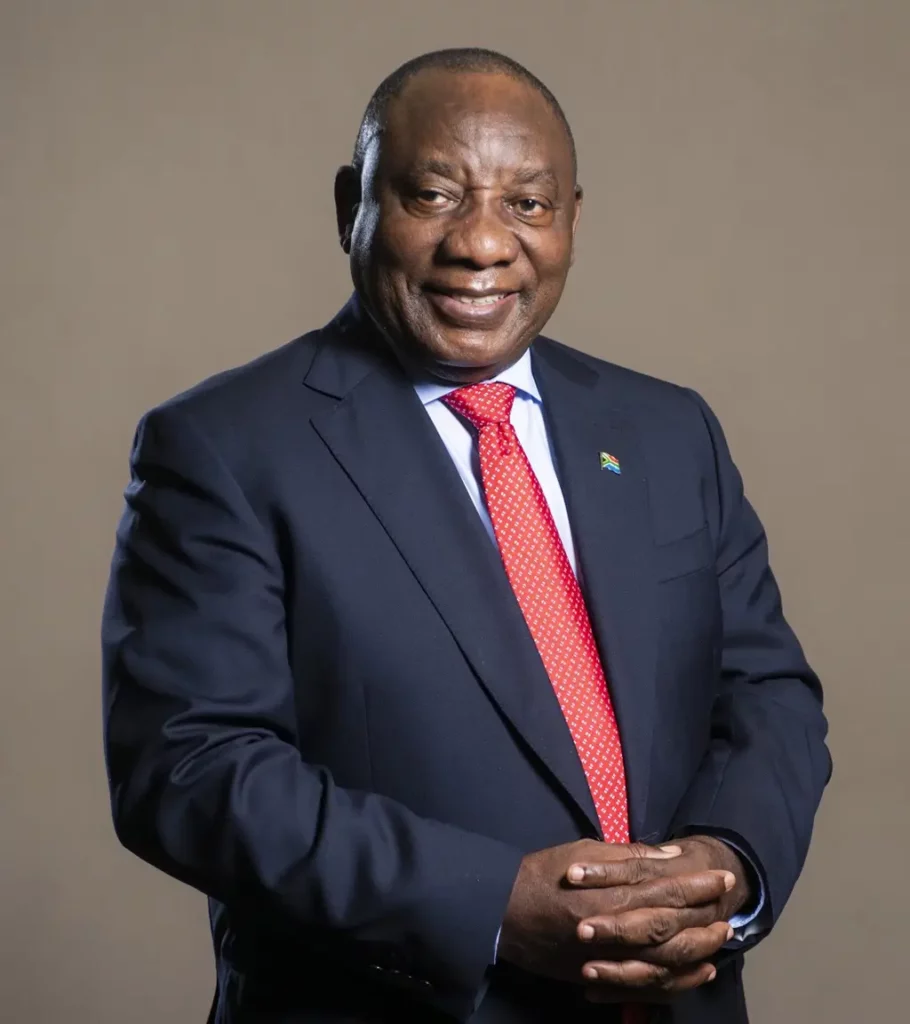
Cyril Ramaphosa re-elected as president: A Victory of Resilience and Reform
Cyril Ramaphosa’s journey to re-election has not been without hurdles. The ANC, while still the dominant force in South African politics, has faced criticism over governance issues, economic stagnation, and persistent corruption allegations. Ramaphosa, however, has been seen as a reformist within the party, advocating for anti-corruption measures and economic revitalization. His leadership style, characterized by pragmatism and negotiation, has garnered support from various factions within the ANC and from the broader South African populace.
The election campaign was a testament to Ramaphosa’s resilience and his ability to unify a fractured party. His platform focused on economic recovery, job creation, and strengthening state institutions, resonating with voters weary of economic instability and corruption. The election results reflect a cautious optimism among South Africans, hoping that Ramaphosa’s second term will bring about tangible improvements.
Formation of the Government of National Unity: A New Political Landscape
In an unexpected but strategic move, Ramaphosa has spearheaded the formation of a Government of National Unity (GNU). This coalition government, involving key opposition parties such as the Democratic Alliance (DA) and the Economic Freedom Fighters (EFF), aims to foster a collaborative approach to governance. The GNU is envisioned as a platform to transcend partisan divides and address the pressing issues facing the nation with a unified front.
The inclusion of opposition parties in the GNU is a bold step towards political inclusivity and stability. It signals Ramaphosa’s commitment to a broader consensus on critical national issues, such as economic reform, social justice, and institutional integrity. The formation of the GNU is expected to bring diverse viewpoints into the decision-making process, potentially leading to more comprehensive and balanced policies.
Key Challenges and Opportunities
The re-election of Cyril Ramaphosa and the establishment of the GNU come with a unique set of challenges and opportunities. Among the primary challenges is the need to maintain cohesion within the coalition government. The ideological differences between the ANC, DA, and EFF are substantial, particularly on issues like land reform, economic policy, and social services. Managing these differences while ensuring effective governance will require adept negotiation and compromise.
Economic recovery remains a critical focus. South Africa’s economy, struck by the COVID-19 pandemic, faces high unemployment rates, persistent inequality, and slow growth. Ramaphosa’s administration has prioritized economic reforms aimed at attracting investment, boosting manufacturing, and supporting small and medium-sized enterprises. The success of these initiatives will be crucial in restoring public confidence and driving sustainable growth.
Corruption remains a significant hurdle. Ramaphosa’s anti-corruption stance has been a cornerstone of his leadership, but achieving meaningful progress requires dismantling entrenched networks of patronage and ensuring accountability at all levels of government. The establishment of a more robust and independent judiciary and the empowerment of institutions like the National Prosecuting Authority (NPA) will be vital in this regard.
Public Sentiment and Future Prospects
Public sentiment towards Ramaphosa’s re-election and the formation of the GNU is mixed but cautiously hopeful. Many South Africans see this as a pivotal moment, offering a chance for real change and improved governance. The success of this new political arrangement will heavily depend on the government’s ability to deliver on its promises, particularly in terms of economic revitalization, job creation, and combating corruption.
The international community is also watching closely. South Africa’s stability and prosperity are critical for the region, and Ramaphosa’s leadership is viewed as a stabilizing factor. International investors and partners are likely to respond positively to a more stable and inclusive political environment, potentially boosting economic opportunities.
Cyril Ramaphosa’s re-election and the formation of the Government of National Unity represent a significant evolution in South Africa’s political dynamics. This period offers a unique opportunity to address long-standing issues through a collaborative and inclusive approach. While challenges abound, the potential for meaningful progress is substantial. The success of this new political era will hinge on effective leadership, sustained reform efforts, and the ability to unify diverse political forces towards common national goals.


