|
Getting your Trinity Audio player ready...
|
On what would have been the 77th birthday of the late O.J. Simpson, the former NFL star and actor who passed away on April 10, 2024, let’s take a moment to reflect on his extraordinary journey: from football stardom to the infamous murder trial and beyond.
Early Life and College Career
Orenthal James “O.J.” Simpson was born on July 9, 1947, in San Francisco, California. His early life was marked by a blend of hardship and promise. Growing up in the Potrero Hill neighbourhood, Simpson faced numerous challenges. His father, Jimmy Lee Simpson, left the family when O.J. was young, and his mother, Eunice, worked as a hospital administrator to support her four children. Despite these challenges, Simpson showed an early aptitude for athletics, which would become his ticket to success.
Simpson attended Galileo High School, where he excelled in football. His natural talent and determination caught the attention of college scouts, and he eventually attended the City College of San Francisco before transferring to the University of Southern California (USC).
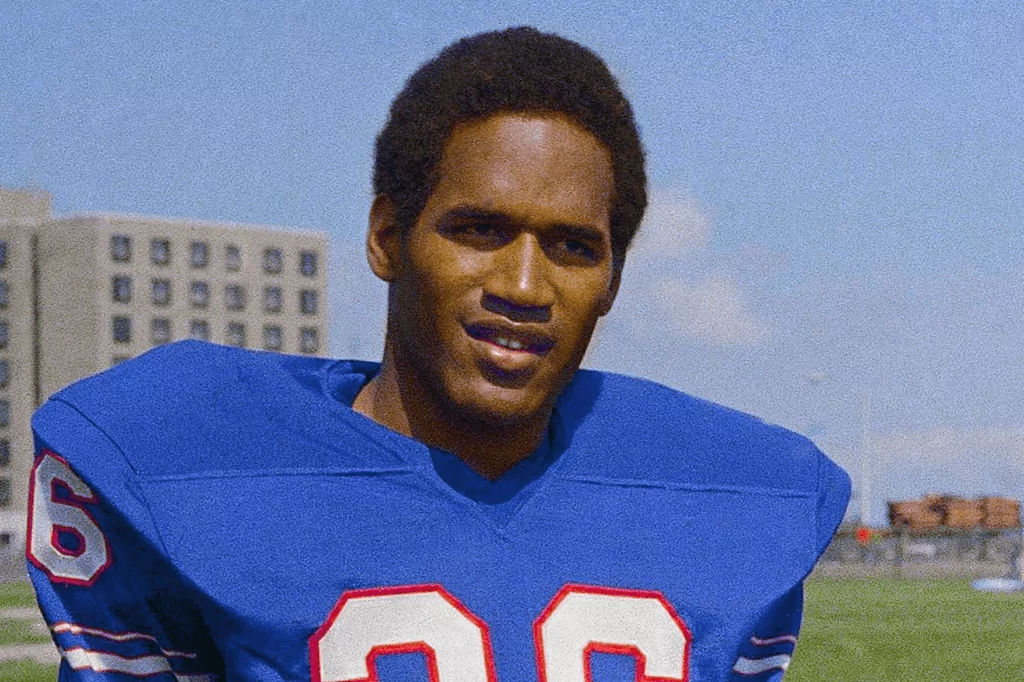
At USC, Simpson’s football career took off. Under the guidance of coach John McKay, Simpson became a standout running back. His performance on the field was nothing short of spectacular, culminating in him winning the Heisman Trophy in 1968. This prestigious award is given annually to the most outstanding player in college football and solidified Simpson’s reputation as a rising star in the sport.
O.J. Simpson NFL Career
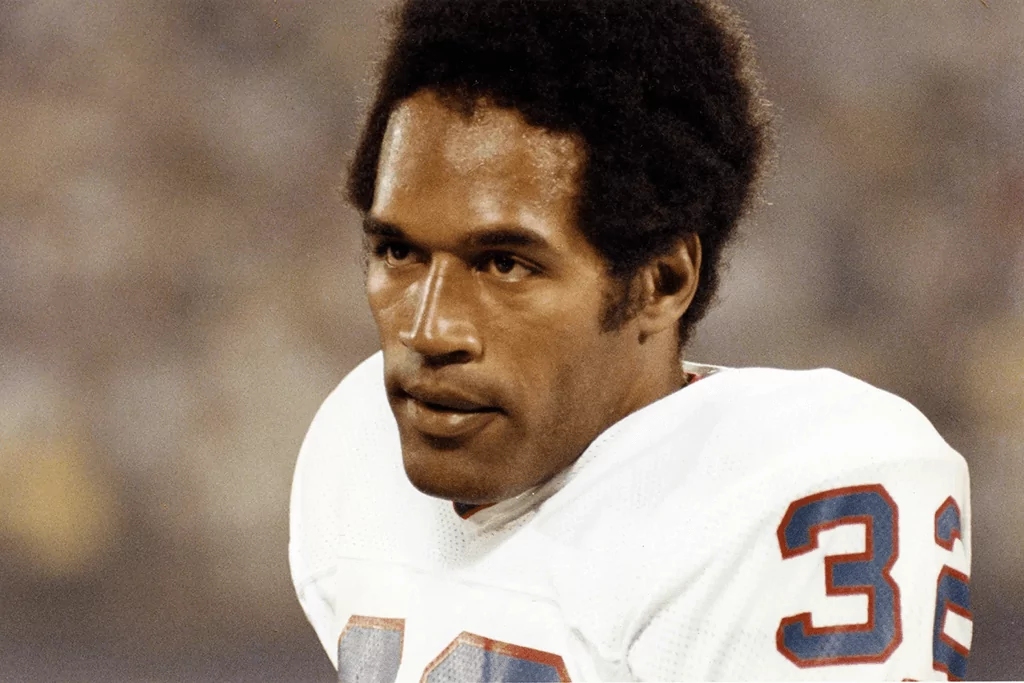
Simpson’s transition to the professional leagues was eagerly anticipated. He was selected as the first overall pick in the 1969 NFL Draft by the Buffalo Bills. Initially, Simpson struggled to make a significant impact due to the team’s offensive strategies and coaching issues. However, when Lou Saban became the head coach in 1972, he revamped the team’s offence to better utilize Simpson’s talents. The change paid off.
Simpson’s career reached its zenith in 1973 when he became the first player in NFL history to rush for over 2,000 yards in a single season, achieving a total of 2,003 yards in just 14 games. This extraordinary feat earned him the title of NFL MVP and solidified his status as one of the greatest running backs of all time. Over his 11-season career, which included a stint with the San Francisco 49ers, Simpson was a six-time Pro Bowl selection and was inducted into the Pro Football Hall of Fame in 1985. His playing style, characterized by speed, agility, and vision, set new standards for future generations of running backs.
Broadcasting and Acting
After retiring from professional football in 1979, Simpson seamlessly transitioned into a successful career in broadcasting and acting. His charismatic personality and fame made him a natural fit for television. Simpson became a football commentator for NBC, providing analysis and commentary on NFL games. His insights were well-received, and he became a familiar face on television.
Simpson’s acting career also flourished. He appeared in a variety of television shows and films, most notably the “Naked Gun” series, where he played the lovable and clumsy Detective Nordberg. His performance in these films showcased his comedic timing and broadened his appeal beyond sports fans to a general audience. Simpson also appeared in commercials and other media, further cementing his status as a multifaceted celebrity.
Personal Life
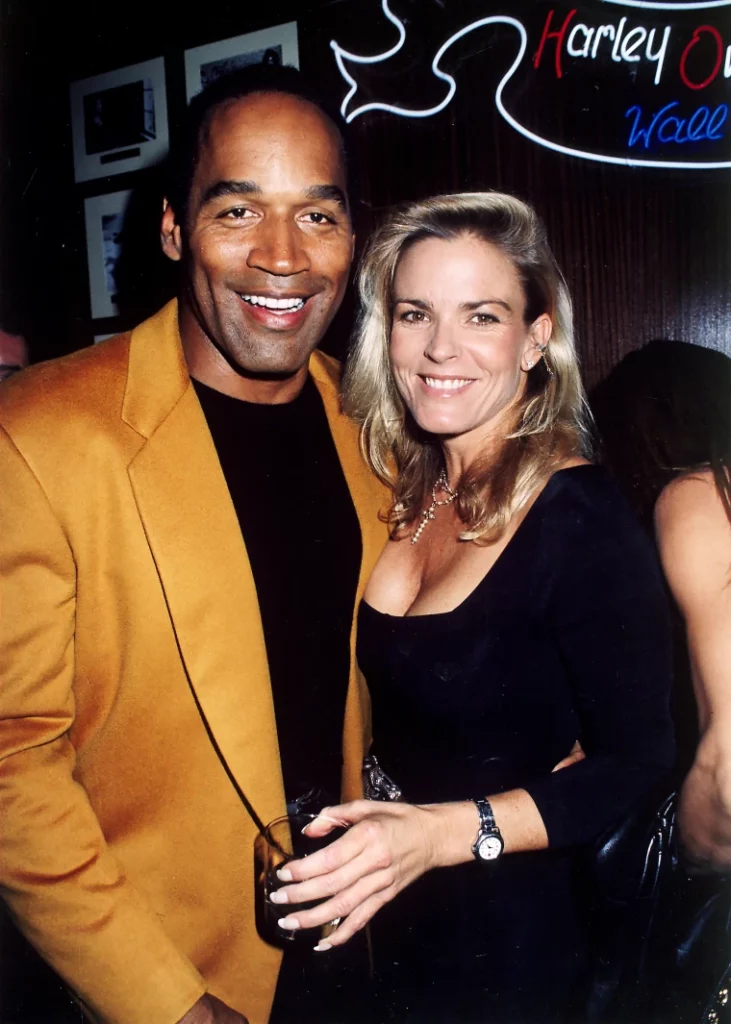
Simpson’s personal life appeared to be as successful as his professional career. He married his high school sweetheart, Marguerite Whitley, in 1967. The couple had three children: Arnelle, Jason, and Aaren. Tragically, Aaren drowned in the family swimming pool shortly before her second birthday in 1979. The strain of this tragedy, along with other factors, led to Simpson and Marguerite’s divorce later that year.
In 1985, Simpson married Nicole Brown. They had two children together, Sydney and Justin. Despite the outward appearance of a happy family, their marriage was troubled. There were numerous reports of domestic violence, and Nicole filed for divorce in 1992, citing irreconcilable differences. The divorce was finalized in 1992, but the tumultuous nature of their relationship continued to surface in public.
The Murder Trial (1994-1995)
The Murders
On the night of June 12, 1994, Nicole Brown Simpson and her friend Ronald Goldman were brutally murdered outside Nicole’s condominium in the upscale Brentwood neighbourhood of Los Angeles. The crime scene was horrific, with both victims suffering multiple stab wounds. Evidence quickly pointed towards O.J. Simpson as a suspect. Blood evidence, a glove found at the crime scene, and Simpson’s erratic behaviour in the days following the murders contributed to the growing suspicion.
On June 17, 1994, Simpson was scheduled to turn himself into the authorities. However, instead of surrendering, he led police on a low-speed chase through Los Angeles in a white Ford Bronco driven by his friend Al Cowlings. The chase was broadcast live on national television, captivating millions of viewers. The spectacle of the chase, combined with Simpson’s status as a beloved public figure, turned the case into a media sensation.
The Trial of the Century
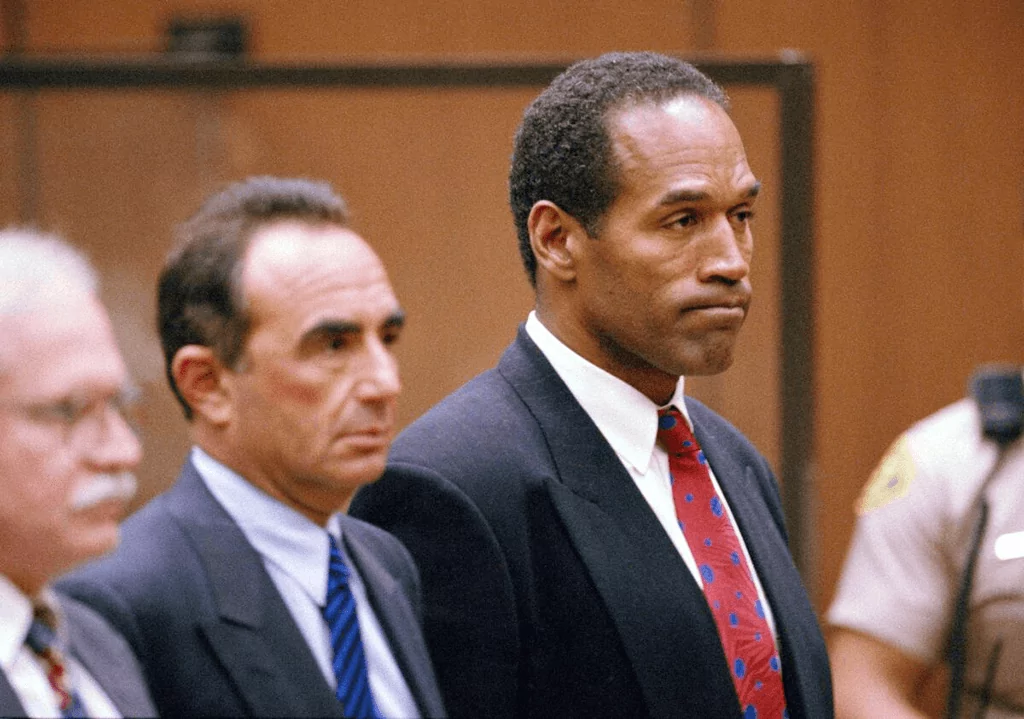
O.J. Simpson’s trial began on January 24, 1995, and lasted until October 3, 1995. Dubbed “The Trial of the Century,” it was one of the most publicized criminal trials in American history. The proceedings were broadcast live, drawing enormous public interest and media coverage.
Simpson was represented by a high-profile defence team known as the “Dream Team,” which included prominent attorneys Johnnie Cochran, Robert Shapiro, F. Lee Bailey, Alan Dershowitz, and others. The prosecution, led by Marcia Clark and Christopher Darden, faced the formidable task of presenting the evidence against Simpson.
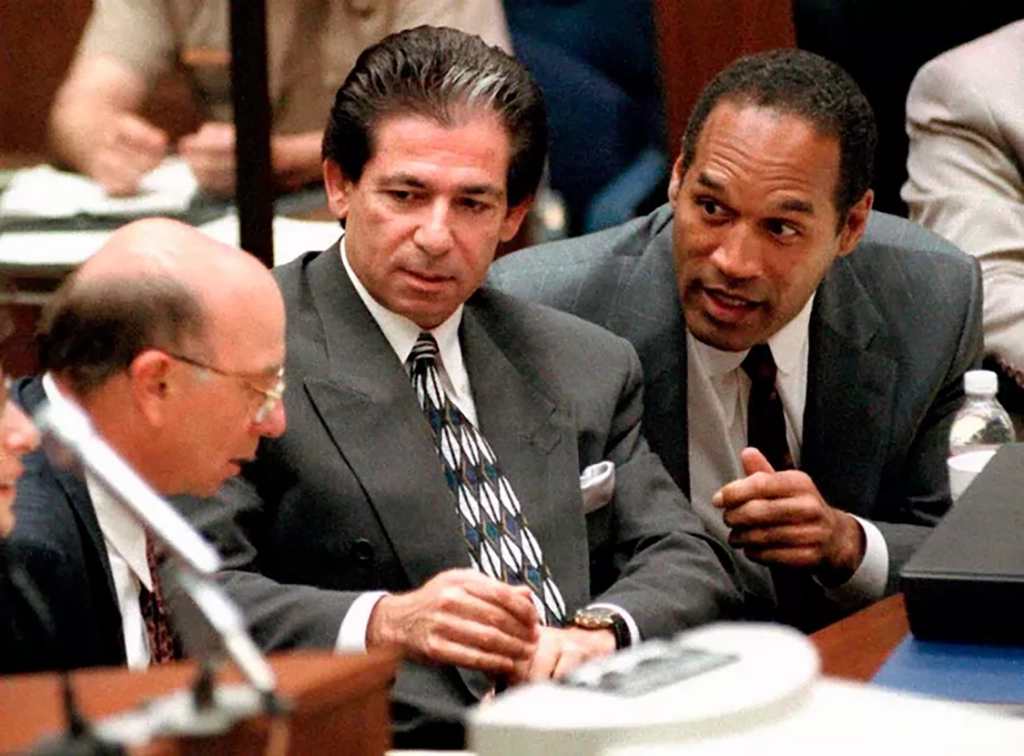
The trial was marked by dramatic moments and racial tensions. The defence argued that Simpson was the victim of a racist conspiracy by the Los Angeles Police Department. They attacked the credibility of the police officers involved in the investigation, particularly Mark Fuhrman, who was accused of planting evidence and using racial slurs. The defence’s strategy was to cast doubt on the integrity of the investigation and the handling of evidence.
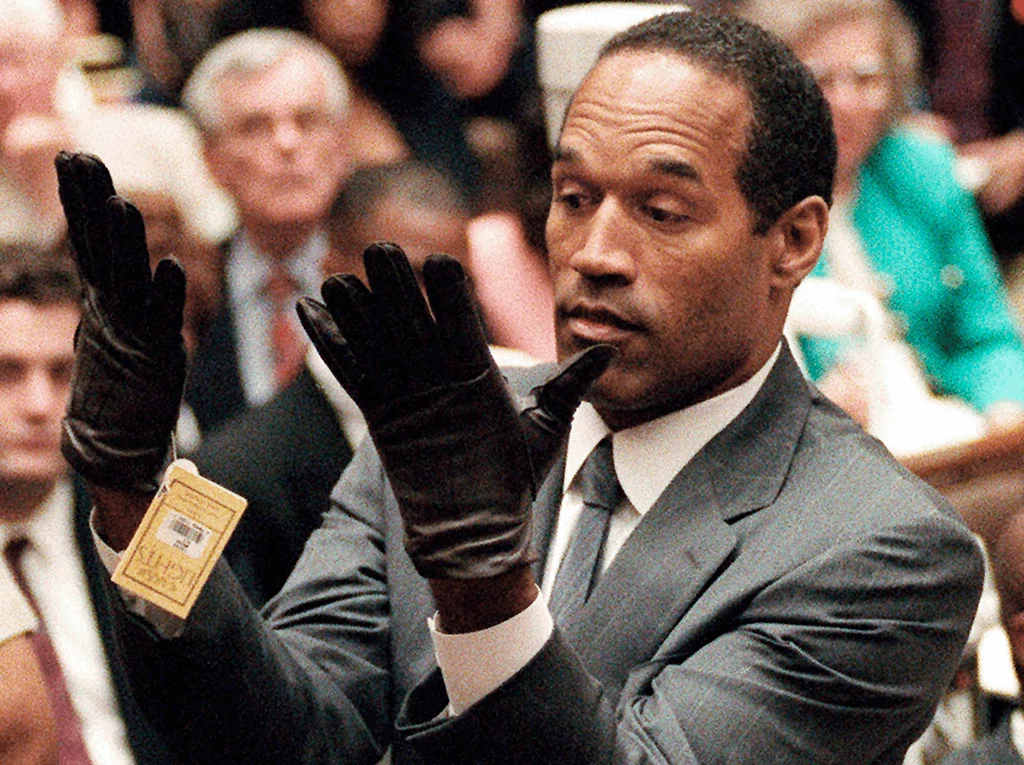
One of the most memorable moments of the trial came when Simpson was asked to try on the gloves found at the crime scene. The gloves appeared to be too small, leading Cochran to famously declare, “If it doesn’t fit, you must acquit.” This moment resonated with the jury and the public, contributing to the eventual verdict.
On October 3, 1995, Simpson was acquitted of all charges. The verdict was met with a mixture of shock, joy, and outrage, reflecting the deep racial and social divisions in the United States. While many in the African American community viewed the acquittal as a victory against a biased legal system, others believed that Simpson had gotten away with murder.
O.J. Simpson Post-Trial Life
Civil Trial and Financial Troubles
Despite his acquittal in the criminal trial, Simpson faced a civil trial in 1997 brought by the families of Nicole Brown Simpson and Ronald Goldman. The burden of proof in civil cases is lower than in criminal cases, requiring only a preponderance of evidence rather than proof beyond a reasonable doubt. The civil jury found Simpson liable for the wrongful deaths of Nicole and Ron, awarding $33.5 million in damages to their families.
The civil judgment had a significant financial impact on Simpson. His assets were targeted, and he struggled to meet the financial obligations imposed by the court. The Goldmans and Browns pursued the judgment aggressively, leading to the seizure of various assets, including Simpson’s Heisman Trophy.
Life After Acquittal
Following the criminal and civil trials, Simpson’s life was marked by a series of controversies and legal issues. He moved to Florida, partly because of favorable laws regarding the protection of personal assets from creditors. In Florida, Simpson attempted to live a quieter life, but his notoriety made it difficult to stay out of the public eye.
Simpson’s attempts to rebuild his life were fraught with difficulties. He faced numerous financial problems and struggled to find stable sources of income. He made money through autograph signings, memorabilia sales, and personal appearances, but these ventures were often met with public scrutiny and backlash.
2007 Armed Robbery Conviction
In 2007, Simpson’s legal troubles escalated dramatically. He was arrested in Las Vegas for leading a group of men into a hotel room to retrieve sports memorabilia that he claimed had been stolen from him. The incident involved armed confrontation, and Simpson was charged with multiple felonies, including armed robbery and kidnapping.
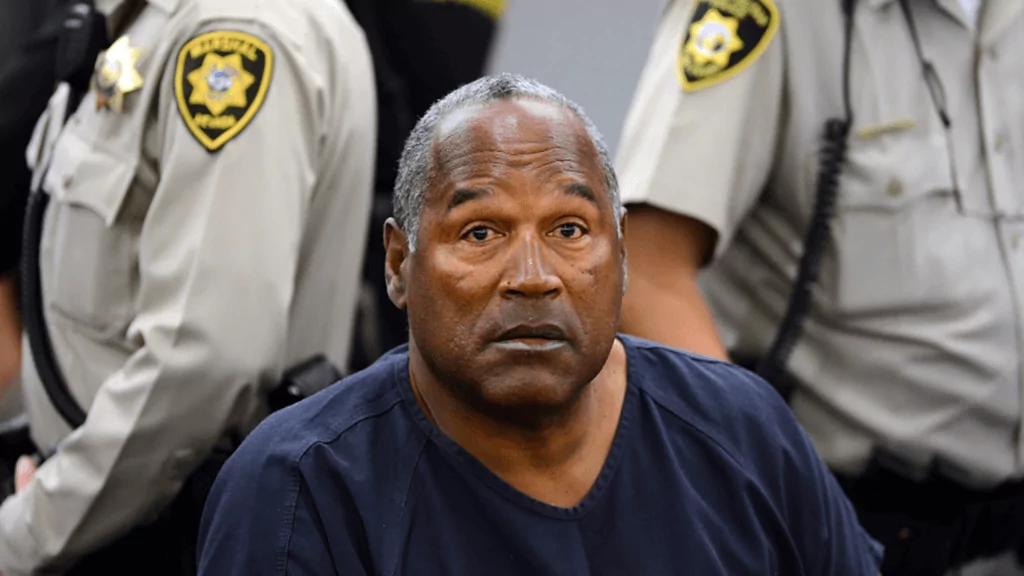
The trial in 2008 resulted in Simpson being convicted on all charges. He was sentenced to 33 years in prison, with the possibility of parole after nine years. The severity of the sentence was seen by many as a form of retribution for his earlier acquittal in the murder trial. Simpson began serving his sentence at the Lovelock Correctional Center in Nevada.
Release and Later Years
After serving nine years, Simpson was granted parole and released from prison on October 1, 2017. His parole hearing was highly publicized, reflecting the enduring public fascination with his case. Upon his release, Simpson moved to Las Vegas, where he has attempted to maintain a relatively low profile.
Simpson’s post-prison life has been characterized by occasional public appearances and activity on social media. He has expressed a desire to live a quiet life and enjoy time with his family and friends. Despite this, his presence continues to generate media interest and public debate.
O.J. Simpson Legacy and Public Perception
O.J. Simpson’s legacy is a complex and polarizing one. His early achievements in sports and entertainment were groundbreaking and earned him a place among the most celebrated athletes of his time. However, these accomplishments have been overshadowed by the events surrounding the murders of Nicole Brown Simpson and Ronald Goldman, and his subsequent legal battles.
For many, Simpson remains a symbol of the flaws and biases within the American legal system. His acquittal in the murder trial is often cited in discussions about racial injustice and the power of celebrity in influencing legal outcomes. Conversely, his civil conviction and the later armed robbery case have reinforced his image as a figure of controversy and legal troubles.
Simpson’s life story has been the subject of numerous books, documentaries, and dramatizations, including the critically acclaimed miniseries “The People v. O.J. Simpson: American Crime Story.” These portrayals have kept his story in the public consciousness and continue to spark discussions about crime, justice, and media sensationalism.
In conclusion, O.J. Simpson’s life before the murder trial was marked by remarkable achievements and widespread adulation. His success in football, broadcasting, and acting made him a household name and a beloved public figure. However, his life post-trial has been defined by legal troubles, financial struggles, and a tarnished legacy. The dichotomy of his public persona—celebrated athlete and controversial figure—continues to fascinate and polarize public opinion. Simpson’s story serves as a poignant reminder of how quickly and dramatically a public figure’s life can change, and the enduring impact of public perception and media portrayal on one’s legacy.
Recommended articles:


