|
Getting your Trinity Audio player ready...
|
Introduction to Quantum Computing
Quantum computing, the technology that can solve complex problems way faster than classical computers, has been the hot topic of research and competition. The quest for quantum primacy—where a quantum computer can do something classical computers can’t—has become the new tech race among nations and tech giants. This post will cover the current state of quantum computing, the players, the milestones and what happens when we achieve quantum primacy.

#1 Quantum Computing 101
Quantum computing uses the principles of quantum mechanics, where qubits can be 0 and 1 at the same time, to support and scale business organizations. Effective management and extraction of value from data are crucial in quantum computing, enabling informed decision-making and driving new opportunities.
#2 Key Players
Players in the quantum primacy race are creating innovative solutions and developing cutting-edge technologies:
- Google: Hit quantum supremacy in 2019 with their Sycamore processor.
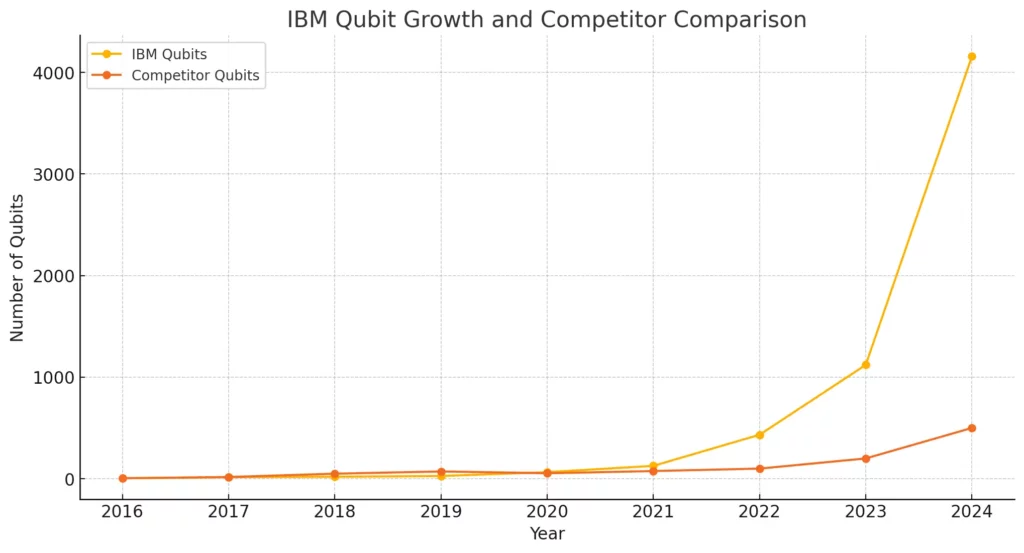
- IBM: Advancing their quantum computing with IBM Quantum Experience and 1,000 qubit system by 2023.
- Microsoft: Topological qubits and Azure Quantum cloud service.
- Intel: Heavy investment in quantum hardware, silicon spin qubits.
- China: Quantum communication and computing, Jiuzhang quantum computer.
These players support various organizations, including healthcare, manufacturing, and government industries, with their quantum computing solutions.
#3 Performance Benchmarks
Google’s Quantum Supremacy
In 2019, Google announced that their 53-qubit Sycamore processor did a specific task in 200 seconds that would take the world’s fastest supercomputer 10,000 years. This was a big deal in the quantum primacy race, showcasing how Google leverages its quantum computing capabilities to achieve unprecedented computational speeds.
IBM’s Roadmap
IBM has been open about their roadmap, 433 qubit system called Condor by 2022 and 1,121 qubit system by 2023. It also disputes Google’s quantum supremacy claim, saying the same task could be done on a classical computer in 2.5 days, so what does that mean by supremacy? IBM manages its quantum computing projects meticulously to ensure they meet their ambitious goals.
China’s Progress
In 2020, China announced their photonic quantum computer, Jiuzhang, achieved quantum supremacy by solving a Gaussian boson sampling problem way faster than any classical computer, showcasing the impressive performance of China’s quantum computing technology.

#4 Quantum Hardware and Quantum Algorithms
Hardware
Quantum computers use different physical systems to create qubits, superconducting circuits, trapped ions, topological qubits, silicon spin qubits. Each has its own advantages and challenges in coherence time, error rates and scalability.
Additionally, various services are available to support quantum hardware, including solutions for enriching, orchestrating, protecting, and archiving data, as well as end-to-end platforms and subscriptions to manage and extract value from quantum data.
Algorithms
Shor’s algorithm for factoring and Grover’s algorithm for search show the power of quantum computing. Quantum error correction and quantum machine learning are active areas of research.
Quantum algorithms provide solutions for complex problems in various industries, enhancing efficiency and effectiveness.
#5 Key Challenges to Quantum Primacy
Despite the progress, there are still:
- Decoherence and Noise: Quantum systems are very sensitive to their environment, so errors must be corrected.
- Scalability: Building a quantum computer with millions of qubits is hard.
- Error Correction: Quantum error correction codes must be efficient for practical quantum computing.
Overcoming these challenges requires robust support, including strategic guidance, ongoing coaching, tech support, and an end-to-end platform to support data growth.
#6 What’s at Stake
Quantum primacy will have big implications for:
- Cryptography: Quantum computers can break current encryption schemes, so we need quantum-resistant algorithms.
- Drug Discovery: Quantum simulations can revolutionize drug discovery by modelling molecular interactions.
- Optimization Problems: Industries like logistics, finance and materials science can benefit from quantum algorithms that solve complex optimization problems.
Achieving quantum primacy will lead to significant success in these fields, fostering a culture of innovation and excellence.
#7 What’s Next: Meaningful Insights
The future of quantum computing looks good but uncertain. A lot has been done, but the journey to a fully functional, fault-tolerant quantum computer is ongoing. More progress in qubits, error correction and quantum algorithms is needed to unlock the full power of quantum computing.
Additionally, the meaningful insights that can be gained from quantum computing have the potential to revolutionize various fields.
#8 End
The race to quantum primacy is an exciting and high-stakes game that will bring unprecedented computing power. As countries and corporations invest billions, quantum primacy will mean a new era of technological innovation and discovery.

This comparison helps to illustrate the advancements and competitive landscape in the field of quantum computing.
- Google: 53 qubits
- IBM: 65 qubits
- China: 76 qubits
- Intel: 49 qubits
- Microsoft: 50 qubits
In summary, quantum primacy is driving technology forward and will have big implications across many industries. What the players are achieving and working on is unlocking what’s possible, and quantum computing will change everything. Delighting customers will be crucial in the race to quantum primacy.


