|
Getting your Trinity Audio player ready...
|
Space exploration has always captivated humanity’s imagination, pushing the boundaries of what we know about the universe.

In recent years, SpaceX, founded by entrepreneur Elon Musk, has emerged as a leading force in the quest to expand humanity’s presence beyond Earth. From pioneering reusable rocket technology to partnering with NASA on ambitious missions, SpaceX is reshaping the landscape of space exploration. In this article, we delve into recent space missions, groundbreaking discoveries, the privatization of space exploration, and the potential for space tourism through the lens of SpaceX.
Recent Space Missions
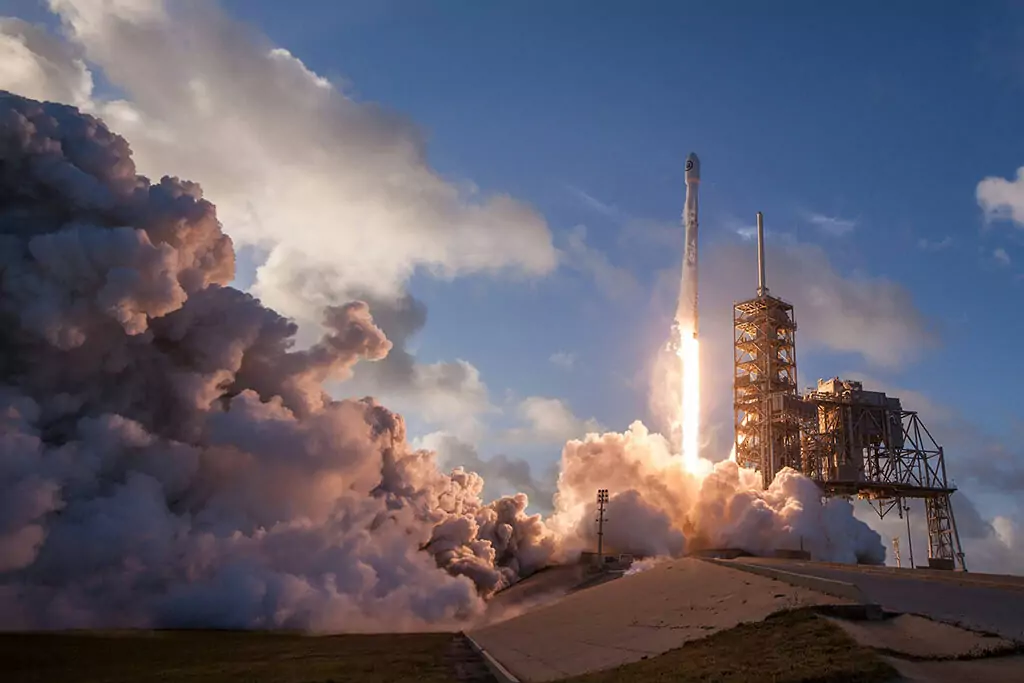
SpaceX has made headlines with its ambitious missions, including the Crew Dragon’s historic journey to the International Space Station (ISS), marking the first crewed orbital launch from U.S. soil since the Space Shuttle era. The company’s Falcon 9 rockets have become synonymous with reliability and cost-efficiency, launching satellites, cargo resupply missions to the ISS, and even deploying Starlink satellites to provide global internet coverage. Moreover, SpaceX’s Starship project aims to revolutionize space travel with its next-generation spacecraft capable of carrying humans to the Moon, Mars, and beyond.
Discoveries and Innovations
SpaceX’s achievements extend beyond successful launches and landings. The company’s focus on innovation has led to groundbreaking discoveries and advancements in rocket technology. For example, the development of reusable rockets has the potential to drastically reduce the cost of space exploration, making it more accessible to governments, research institutions, and commercial entities alike. Furthermore, SpaceX’s collaboration with NASA and other partners has facilitated scientific research in areas such as microgravity experiments, Earth observation, and planetary exploration.
Privatization of Space Exploration
SpaceX’s success has sparked a paradigm shift in space exploration, with the private sector playing an increasingly prominent role. The company’s ability to leverage private funding, entrepreneurial vision, and rapid iteration has disrupted traditional aerospace industry norms. Commercial partnerships with NASA, satellite deployment services, and plans for lunar and Martian missions demonstrate the growing influence of private companies in shaping the future of space exploration.
However, questions remain about the balance between commercial interests, regulatory oversight, and international collaboration in the new space race.
Potential for Space Tourism
SpaceX’s ambitious vision extends beyond scientific exploration to include the democratization of space travel. The company’s plans for space tourism aim to make space accessible to private individuals, opening up new possibilities for adventure and exploration. Projects such as the SpaceX Inspiration4 mission, which sent civilians on a multi-day journey around Earth, highlight the growing interest in commercial space travel. While space tourism presents exciting opportunities, challenges such as safety, sustainability, and affordability must be addressed to ensure its long-term viability.
SpaceX stands at the forefront of a new era in space exploration, pushing the boundaries of what’s possible and inspiring future generations to dream big. From recent missions and groundbreaking discoveries to the privatization of space exploration and the potential for space tourism, the company’s impact reverberates across the cosmos. As SpaceX continues to innovate and collaborate with partners around the world, the future of space exploration holds limitless possibilities, promising to unlock the mysteries of the universe and redefine humanity’s place among the stars.
Today marks the fourth anniversary of Falcon 9 launching @NASA’s Demo-2 mission to the @space_station, returning human spaceflight to the United States pic.twitter.com/jzwyCwam3l
— SpaceX (@SpaceX) May 30, 2024


